

Introduction
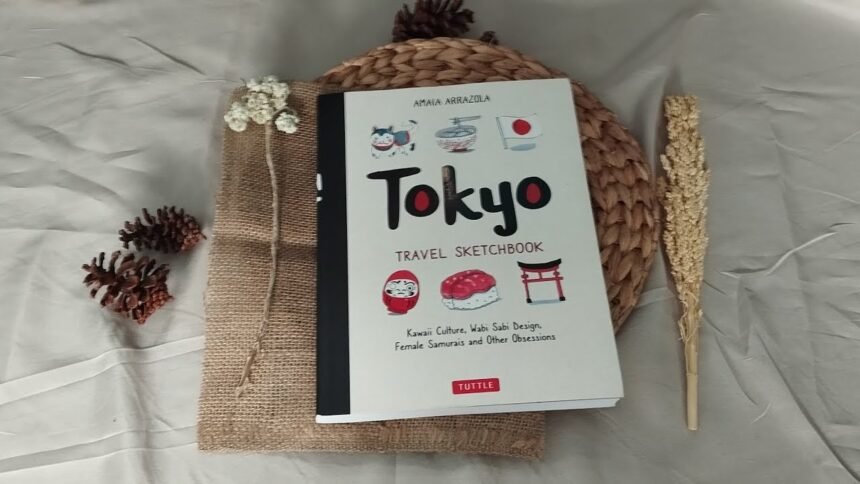
The world of illustrated travel writing has a special place for readers who enjoy both art and storytelling. Among these creative works, Tokyo Travel Sketchbook stands out as a visual diary that captures everyday life in Japan’s capital city. Instead of focusing on traditional travel guide formats, it presents Tokyo through sketches, emotions, and personal observations.
Rather than listing attractions or providing rigid travel plans, this work focuses on lived experiences. Every page reflects moments seen through an artist’s perspective, offering a unique and emotional way to understand Tokyo’s rhythm and identity. Instead of telling readers what to do, it encourages them to slow down and observe what already exists around them.
The charm of this illustrated work lies in its simplicity. It does not attempt to impress with complicated descriptions or exaggerated storytelling. Instead, it quietly records life as it happens, turning ordinary scenes into meaningful visual memories.
A Different Kind of Travel Book
Unlike conventional travel books that rely heavily on facts, schedules, and recommendations, this illustrated journal focuses on interpretation. It does not present Tokyo as a checklist of places to visit, but rather as a living environment full of emotions and movement.
The pages often include everyday urban experiences such as crowded train rides, small hidden cafés, glowing vending machines at night, and quiet residential streets tucked behind skyscrapers. These simple details become the foundation of the narrative.
Instead of guiding readers step-by-step through a destination, it invites them to observe how life flows naturally in one of the busiest cities in the world. There is no urgency or pressure in the storytelling. Everything feels calm, reflective, and personal—like reading someone’s private sketch diary.
This approach shifts the meaning of travel itself. It becomes less about consumption and more about awareness and observation.
The Artist Behind the Work
The creator of this visual journey is Amaia Arrazola, a Spanish illustrator recognized for her expressive and emotionally driven artwork. Her style is known for bold colors, fluid lines, and a strong sense of storytelling through visuals.
During her residency in Tokyo, she spent time exploring the city and documenting her daily experiences through sketches. These drawings later formed the foundation of Tokyo Travel Sketchbook, transforming personal observation into a structured artistic narrative.
Her approach is spontaneous and intuitive. Instead of planning every composition in detail, she allowed the city to guide her creativity. This results in artwork that feels natural, imperfect, and deeply human.
There is no widely documented personal information about her private life such as height, family background, or financial status. Her public identity is centered entirely on her artistic contributions, which keeps the focus on creativity rather than personal exposure.
Life in Tokyo Through Observation
One of the most powerful aspects of Tokyo Travel Sketchbook is how it captures the contrast within Tokyo itself. The city exists as a blend of tradition and modernity, stillness and motion, simplicity and complexity.
Through expressive sketches, readers see neon-lit streets full of energy alongside quiet temples that feel untouched by time. These contrasts define the identity of Tokyo and make it one of the most visually dynamic cities in the world.
Instead of focusing on major tourist landmarks, the work highlights small, often overlooked details. These include street fashion, reflections on rainy pavements, hidden alleyways, and everyday human interactions. Together, these fragments form a complete picture of urban life.
This perspective allows readers to experience Tokyo in a more grounded and emotional way, not just as a destination but as a living environment.
Art Style and Emotional Depth
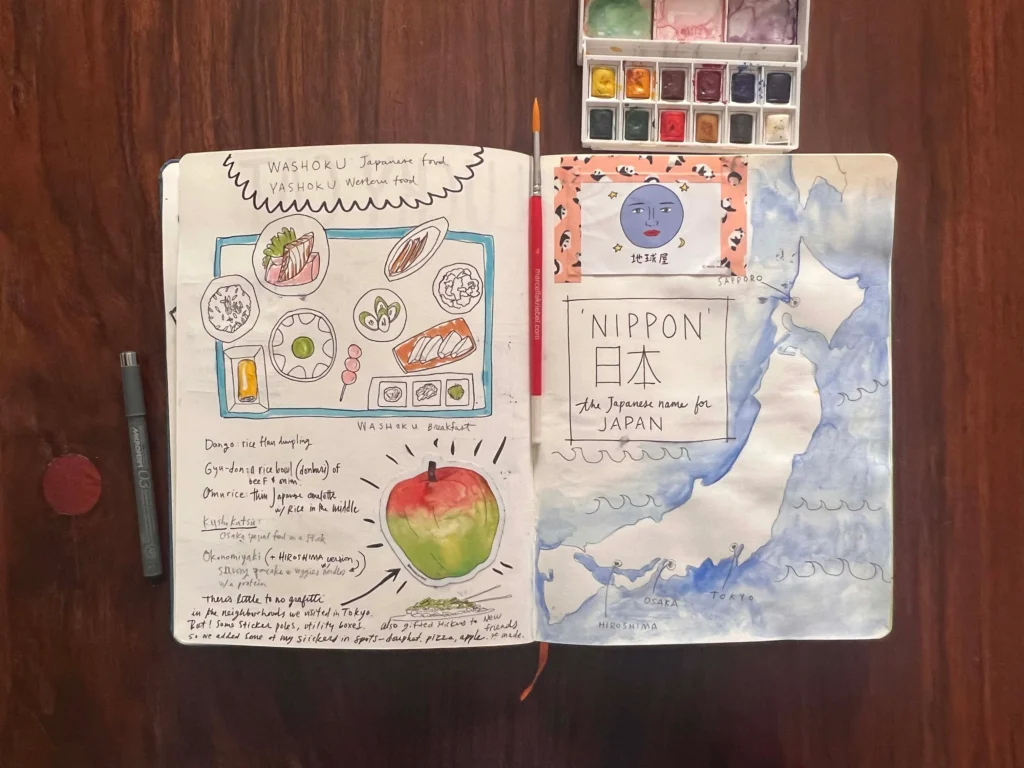
The artistic style plays a central role in shaping the experience of Tokyo Travel Sketchbook. It avoids strict realism and instead embraces expressive lines, loose forms, and vibrant colors.
The drawings feel more like memories than photographs. They capture feelings rather than exact details, allowing space for interpretation. Imperfections are not hidden but embraced, giving each page a sense of honesty and authenticity.
This style reflects how humans actually experience travel. Cities are not remembered in perfect clarity but in fragments, emotions, and impressions. The artwork successfully translates that natural process into visual form.
As a result, the book becomes more than documentation—it becomes interpretation shaped by emotion and memory.
Cultural Layers and Urban Identity
Tokyo is often described as a city of contrasts, and this theme is deeply embedded throughout the narrative. Traditional cultural elements exist alongside futuristic urban life, creating a layered identity that feels constantly evolving.
Ancient temples, quiet residential areas, and traditional rituals coexist with high-speed trains, digital billboards, and modern architecture. Instead of treating these differences as contradictions, the work presents them as natural parts of a unified system.
This coexistence gives Tokyo its unique personality. The city does not feel divided but integrated, where every layer contributes to its identity.
Through this perspective, readers gain a deeper understanding of how culture evolves in urban environments while still preserving its roots.
Personal Identity and Public Information
Although audiences often become curious about the person behind creative works, most personal details are not widely publicized or relevant to the artistic content itself.
For the creator Amaia Arrazola, there is no significant public emphasis on physical attributes such as height or personal information such as family background or net worth. Her recognition is built primarily on her professional work in illustration and visual storytelling.
This separation between personal identity and creative output allows her work to stand on its own, without being influenced by celebrity culture or personal exposure.
Reader Experience and Interpretation
One of the reasons this illustrated journal resonates with readers is its openness. It does not demand a specific interpretation or require prior knowledge of Japanese culture. Instead, it invites readers to engage visually and emotionally.
Each page offers space for personal reflection. Some readers may focus on cultural aspects, while others may connect with the emotional tone or artistic style. This flexibility makes the experience widely accessible.
The reading process is also intentionally slow. Unlike fast-paced travel content, this work encourages observation and reflection. Readers often revisit pages to discover small details they may have missed initially.
This slow engagement deepens the connection between reader and artwork.
Conclusion
In a world filled with structured travel guides and digital content, illustrated travel storytelling offers something more personal and reflective. This visual journal transforms everyday city life into meaningful artistic expression.
The strength of Tokyo Travel Sketchbook lies not in explaining Tokyo, but in helping readers feel it. It turns ordinary urban scenes into emotional experiences that remain with the viewer.
By blending observation, emotion, and artistic interpretation, it demonstrates that travel is not only about places we visit, but also about how we perceive them.
FAQs
Q: What is Tokyo Travel Sketchbook?
A: Tokyo Travel Sketchbook is an illustrated travel journal that shows Tokyo through sketches, emotions, and daily life observations.
Q: Who created Tokyo Travel Sketchbook?
A: Tokyo Travel Sketchbook was created by Spanish illustrator Amaia Arrazola during her artist residency in Tokyo.
Q: Is Tokyo Travel Sketchbook based on real places?
A: Yes, Tokyo Travel Sketchbook is based on real Tokyo locations, daily scenes, and cultural experiences seen by the artist.
Q: Does Tokyo Travel Sketchbook include personal life details?
A: No, Tokyo Travel Sketchbook focuses on art and travel observation, not personal or celebrity details.
Q: What makes Tokyo Travel Sketchbook unique?
A: Tokyo Travel Sketchbook is unique because it mixes sketch art and storytelling to show Tokyo in a personal and emotional way.